
More than a pretty face
Hello!
No kidding, it was 60F while I had my coffee on April Fools Day! And there were actually flowers blooming. Not emerging, but really well and truly blooming. Yippee!
Hellebores in our “Woodland Garden” are bobbing rosy pinks and whites. Lenten roses, as they are also called – apropos of the early Easter this weekend. But even when there is a later Easter, the moniker applies, because, funnily enough, these winter-tough plants need a long time, until their seed pods are forming, to be ready for harvest as a cut flower. Otherwise, a pathetic droop in the vase. Can’t have that! So we must be patient some more weeks and stick to admiring them outside.
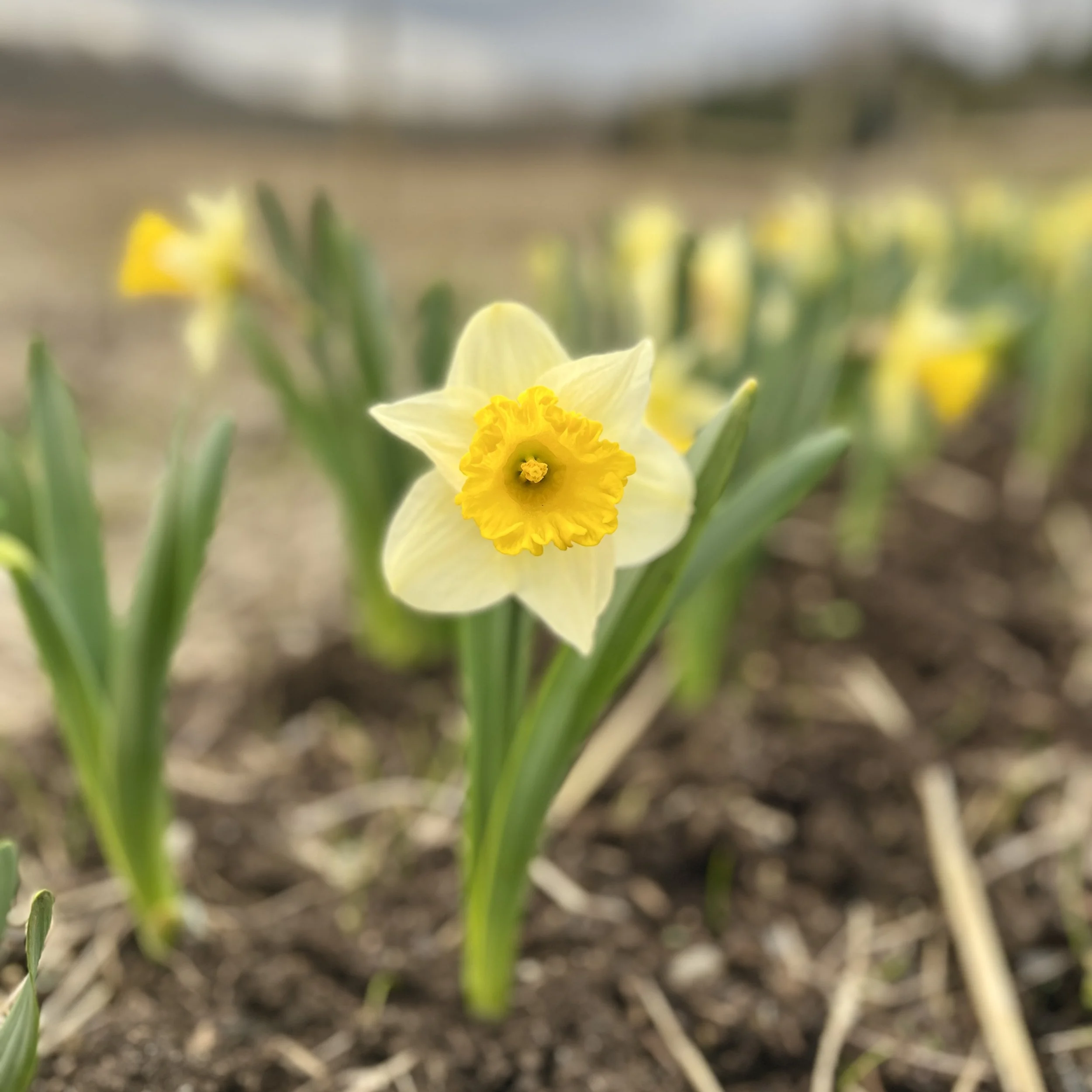
Daffodils, on the other hand, are flowering and can be cut! I saw the pale buttery yellows from the kitchen sink, and they drew me down to the flower bed in my night shirt and slippers to admire them – no parka needed! I planted about 300 last fall as a “proof of concept” crop: Will they grow? Will people buy them?
I actually let them open up past ideal cut flower stage this year because I wanted to see how tall they’d be and get some photos. Voila! A second row of a later variety is just starting to show buds on its first-year stems. They should grow taller in future years. But since the flower company could use some revenue, now I’ll start to harvest. Just hit reply if you want a bunch!
Narcissus, their Latin name, is derived from the Greek myth of Narcissus, a hunter known for beauty that could not be missed. He eschewed those who approached him and fell in love with his own reflection in a pool of water. Bad idea. He was so taken by his reflection he fell into the water and drowned. In Metamorphoses, Ovid recounts that after his death, Narcissus turned into a flower, aka the Daffodil. Our spring friend is more than just a pretty face. It’s come to be considered a symbol of renewal and hope (and Welsh rugby, go figure).
Centuries after Ovid, in Vienna, Sigmund Freud, founder of psychoanalysis, got involved and dubbed “narcissism” a personality disorder, making many of us uneasy about holding ourselves in esteem. No question that malignant self-love masking deep vulnerabilities, taken to extremes, is disorderly and does a lot of damage. But the thing is, my friends, if we don’t place value on our souls, know our own worth, take care of ourselves, accept and learn from our mistakes, and allow others to bloom, life would become lonely, harsh and rather dreary.
We all deserve an appreciative gaze. Not just the daffodils.
So here’s to some healthy self-love. And beauty.
Let there be flowers!
Lizz